Research at an Inflection Point
The bottleneck has moved from execution to judgment. Here's what that means for researchers right now.
Researchers have been making the case for a seat at the table for a long time. What's interesting about this moment is that the table is finally coming to them.
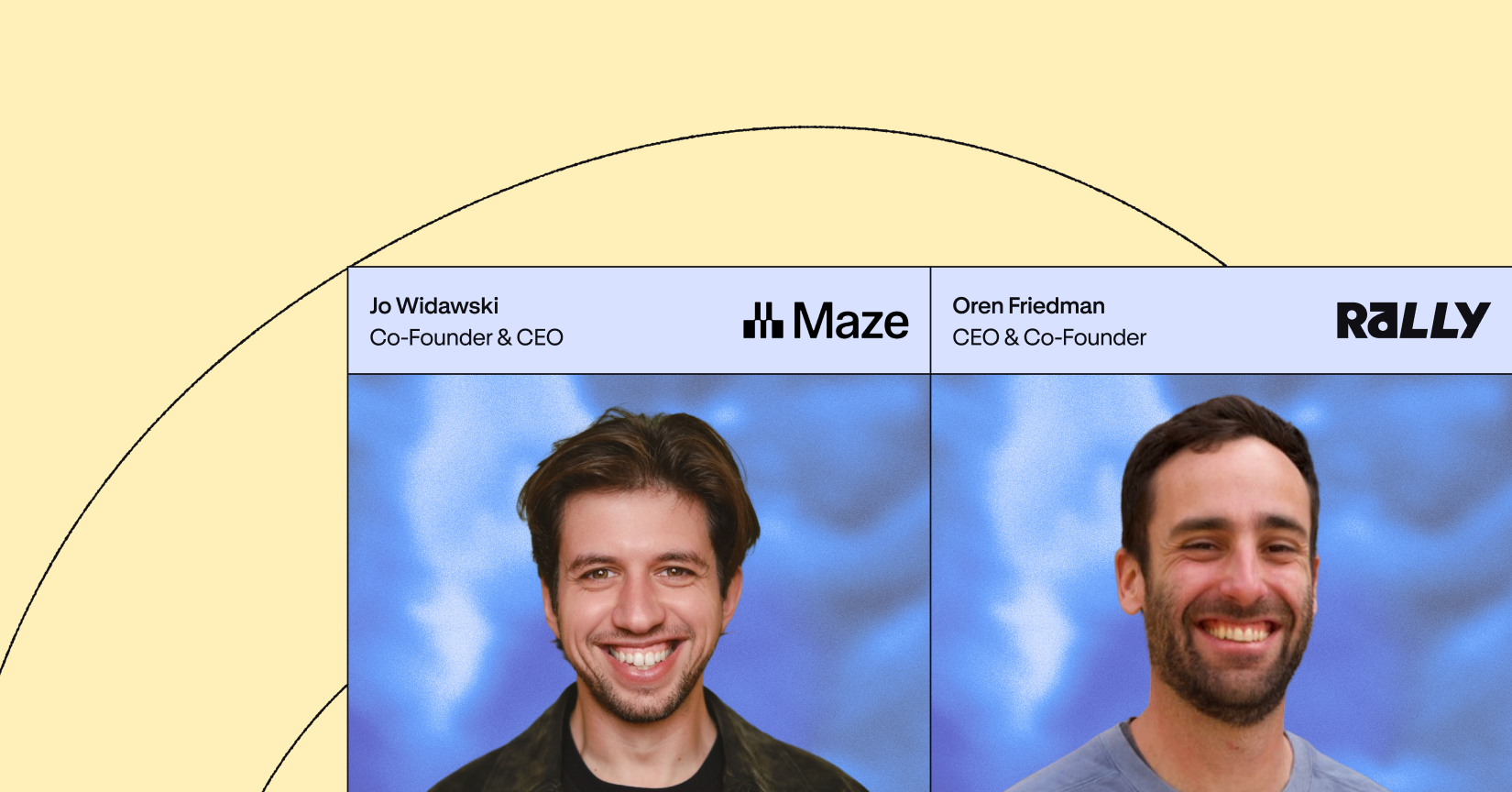
We got into this recently during our fireside chat with Maze CEO Jo Widawski,: Research at an Inflection Point. You can (and should) watch the full session, but we're unpacking the bigger shift it pointed to below.
The New Bottleneck
When a team can build and ship almost anything in a fraction of the time it used to take, the bottleneck stops being execution and starts being judgment. Ten versions of something can exist by tomorrow morning, and the hard part becomes figuring out which one is actually worth building, a question that only gets answered by understanding people.
That's where the value of research is heading: closer to the center of the business than it's ever been. Which, honestly, is where it should have been all along.
From Validation to Direction
The shift shows up in how the best researchers spend their time. The old habit was to validate: someone else made a call, and research checked it after the fact. The people doing this well now are getting into the room while the decision is still being shaped.
Jo put it well: when a researcher inserts themselves while a decision is still forming, something changes. Instead of chasing an invite to the meeting, they become the reason the meeting happens the way it does. At Maze, there's no internal meeting that doesn't start with their researcher naming the assumptions already in the room and coming back later with what held up.
That's a fundamentally different job description. A better one, too.
Raising the Floor, Not Just Running the Studies
The same shift plays out at the team level. As more people run their own studies, someone still has to define what good research looks like, what questions are worth asking, and what a team does with an answer once they have it.
Oren shared a great example from Michelle at Ramp, who calls herself a UXR engineer. She built a system where every PM-led interview gets scored afterward, so each person gets specific feedback on what worked and what to sharpen next time. Three researchers supporting over a hundred people on the product team. The job isn't running all the research yourself, it's building the thing that raises the floor on everyone else's.
That's part of what Rally MCP is designed for: when recruiting, scheduling, and synthesis handoffs run smoothly in the background, more of your time goes toward the work that actually requires you. Less coordination bottleneck, more time building.
The Purity Trade-off
None of this works if research holds onto the instinct to be right about everything. The people navigating this well have made an uncomfortable trade, giving up some purity in exchange for reach.
A usability tweak or a copy test is a decision you can usually walk back, so let people move fast on those. Save the deep, deliberate work for the calls that are hard to undo. Figuring out which is which, and being honest about it, is one of the sharper skills in the field right now.
A Better Frame for Synthetic Research
The synthetic testing conversation tends to get framed as a yes or no on the technology, and Jo put it better than that: the real question is which decisions are you willing to get wrong some of the time?
A fast, reversible call might be exactly where a synthetic input earns its place. A decision that shapes your roadmap for a year deserves a real person in the room, because the parts of a conversation that actually change someone's mind rarely show up in a transcript. They show up in the pause before an answer, the thing someone almost didn't say. That's the piece talking to real users still covers, and it's not going anywhere.
What This Means for You
This is really a story about what happens to the value of good judgment as everything else gets faster. The teams treating that as an opening are the ones building the muscle everyone else will need soon enough.
Want to spend less time on coordination and more time building? See how Rally MCP fits into your research workflow.
Rally’s Research Ops Platform enables you to do better research in less time. Find out how you can use Rally to empower your teams to talk to their users, without disjointed tooling and spreadsheets. Explore Rally now by setting up a demo.